
Seeing steady flight activity near an eave, wall opening, deck, shed, or ground hole can indicate a nearby nest. We help identify the activity, review access and safety conditions, and explain the treatment option before work begins.
Real field service
Identification and safe access come before treatment.
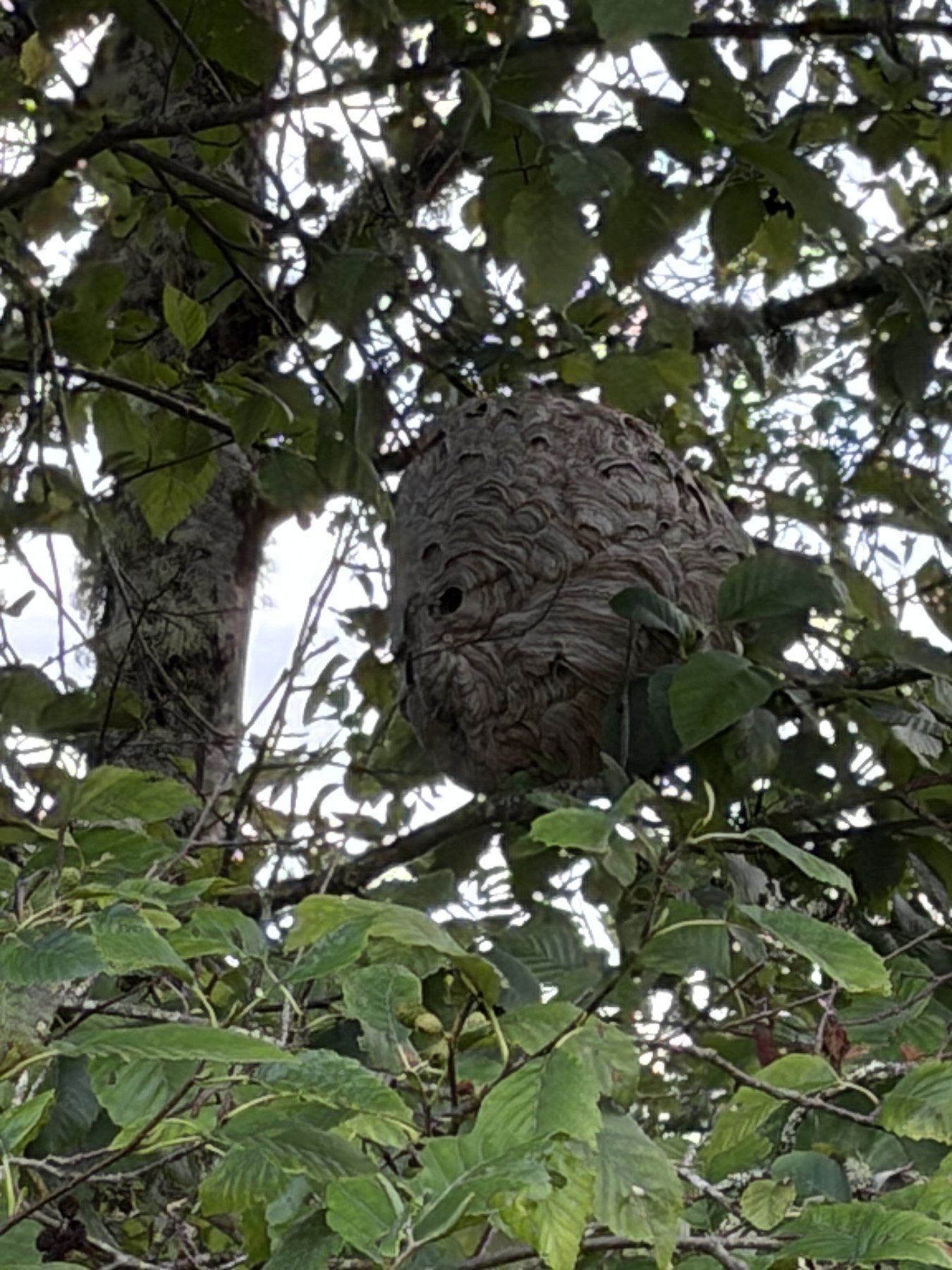
This large aerial nest was documented in a tree during a local service call. Paper wasps, yellowjackets, and hornets can nest in very different locations, so the activity pattern, nest type, height, and safe access all help determine the right approach.
Photos taken from a safe distance can help us prepare for the inspection. Do not approach, strike, spray, or otherwise disturb a large nest before it has been evaluated.
Problems we can inspect
Common local activity
- Paper wasp nests under eaves, railings, and covered structures.
- Yellowjacket traffic entering ground holes or structural openings.
- Accessible aerial hornet nests around qualifying properties.
- Stinging insect activity near doors, patios, play areas, and walkways.
What to expect
- Identification and inspection of the reported activity.
- A targeted recommendation based on nest location and access.
- Clear pricing and safety instructions before treatment.
- Follow-up guidance if activity continues after the expected treatment window.
Wasps and yellowjackets are not all the same
Paper wasps commonly build visible open-comb nests under protected surfaces. Yellowjackets may nest underground or inside wall voids and can become especially noticeable around food and outdoor gathering areas. Correct identification matters because traps and treatment approaches do not work the same way for every stinging insect.
Wasp and yellowjacket FAQ
What customers usually want to know
How quickly should activity decrease after treatment?
The expected timeline depends on the species, nest location, treatment method, weather, and whether the nest is exposed or concealed. Some activity may continue temporarily. We explain what to watch for and when to contact us again.
Do I need to leave during treatment?
That depends on the nest location and treatment being used. We provide any distancing, preparation, pet, and re-entry instructions before work begins.
Can you treat a ground nest or activity entering a wall?
We can inspect reported ground and structural activity. Treatment availability depends on identification, access, nearby people or animals, and whether the nest can be addressed within our current scope.
What should I do before the appointment?
Keep people and pets away from the activity, note the insects' flight path from a safe distance, and send a photo if one can be taken without approaching the nest. Do not plug an entrance or disturb the nest.
Also helpful: When should you call for wasp nest treatment?